


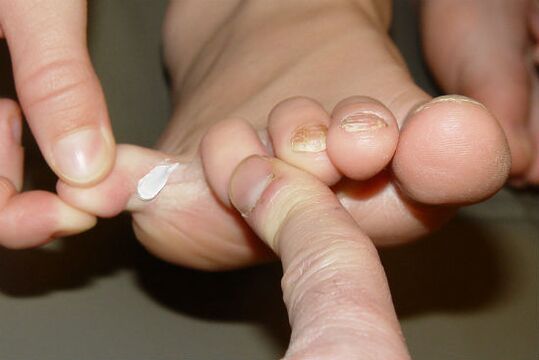
As the spores multiplythe fungus spreads to the skin of the feet and nails, penetrates through microcracks in the blood and spreads through the bloodstream to all internal organs.
What type of fungus grows on toes?
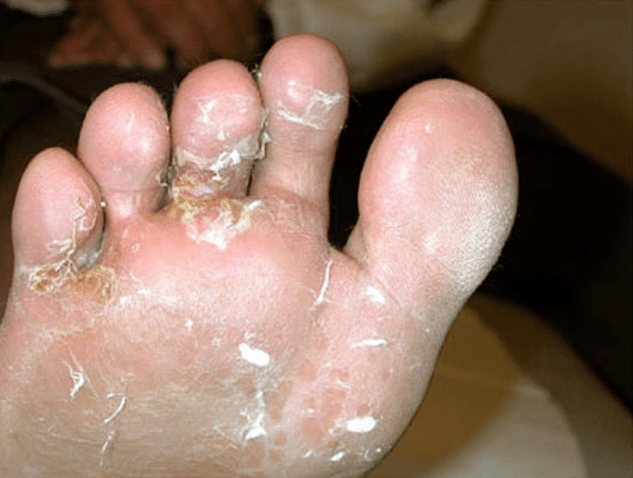
- Toe mycosis is caused by the pathogenic anthropophilic microorganism Tinea pedis..
- Less commonly, the causative agents of the disease are molds and yeast-like fungi of the genus Candida.
- The fungus' preferred habitat is the folds of skin between the toes, where it is warm and moist.
- As the spores of the microorganism multiply, they also spread under the toes and then throughout the foot.
- Primary infection by the fungus occurs in public places: baths, swimming pools, saunas and gym locker rooms.
- Microorganisms tolerate low temperatures and dry surfaces well;they can survive for a long time on clothes, carpets, shoes and, when appropriate, adhere to the skin of the feet.
- Transmission of the microorganism often occurs within the family, when using general hygiene items, slippers, manicure tools.
- Once on the skin, microorganisms can remain inactive for a long time.Active growth of spores begins when favorable conditions occur, i.e. when the immunity of an infected person decreases
- If spores come into contact with the skin of a person suffering from a chronic illness or who does not follow hygiene rules, the development of mycosis begins almost immediately.
- It is especially important for patients suffering from chronic diseases to know what fungus looks like on their fingers, since they are most often infected with the pathogen.
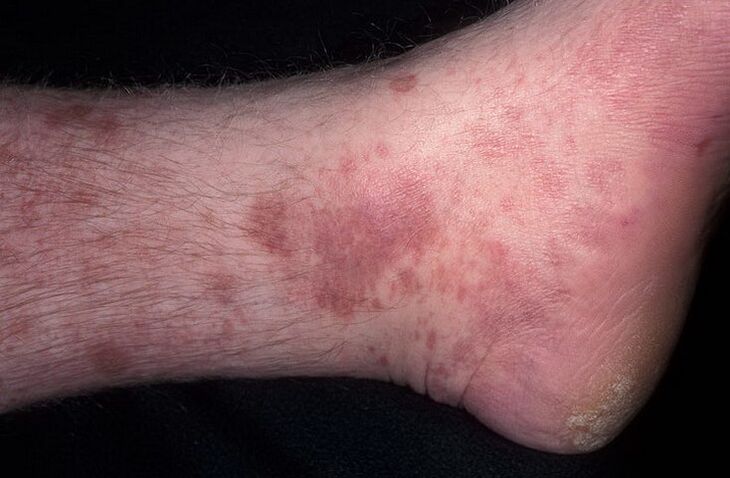
- disturbances in the functioning of the endocrine system;
- circulatory disorders in the extremities, varicose veins;
- flat feet,promoting increased friction on the skin;
- systematic stress;
- periods of hormonal changes in the body: pregnancy, menopause, adolescence;
- inflammation of the lymphatic system;
- post-operative or post-traumaticdecreased immunity.
The growth of the fungus is promoted by foot sweating, shoes made of synthetic materials and microtraumas to the skin.
Favorable conditions for the growth of spores are created by poor nutrition: abuse of sweet, starchy, fatty foods and alcoholic beverages.
In children, toe fungus is rarely diagnosed.The main cause of ringworm in a child is poor hygiene.
Symptoms and forms of the disease
You can suspect the development of a foot infection in the early stages, even before visual signs of ringworm appear.The first sign of infection is peeling and itchy skin..
When microorganisms begin to penetrate the epidermis, the surface of the fingers becomes covered with small scales and cracks.
There is an unpleasant odor coming from the feet.Specific symptoms depend on the form of the disease:
- Off.Small cracks and slight peeling form under the fingers and on their surface.
- Squamous hyperkeratotic.There is intense itching, burning and formation of white crusts on the fingertips.
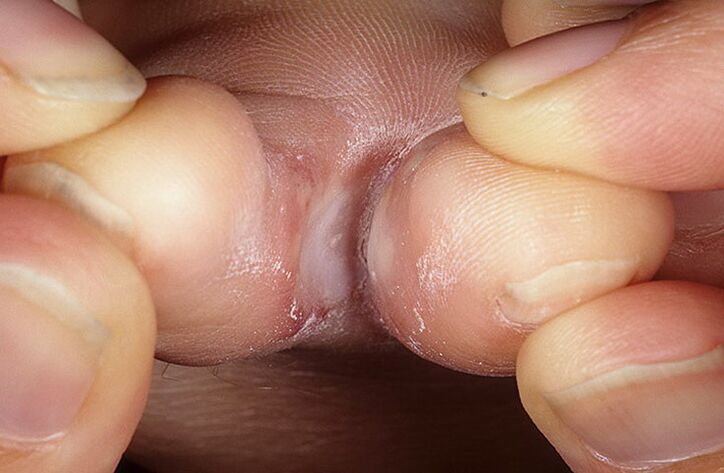
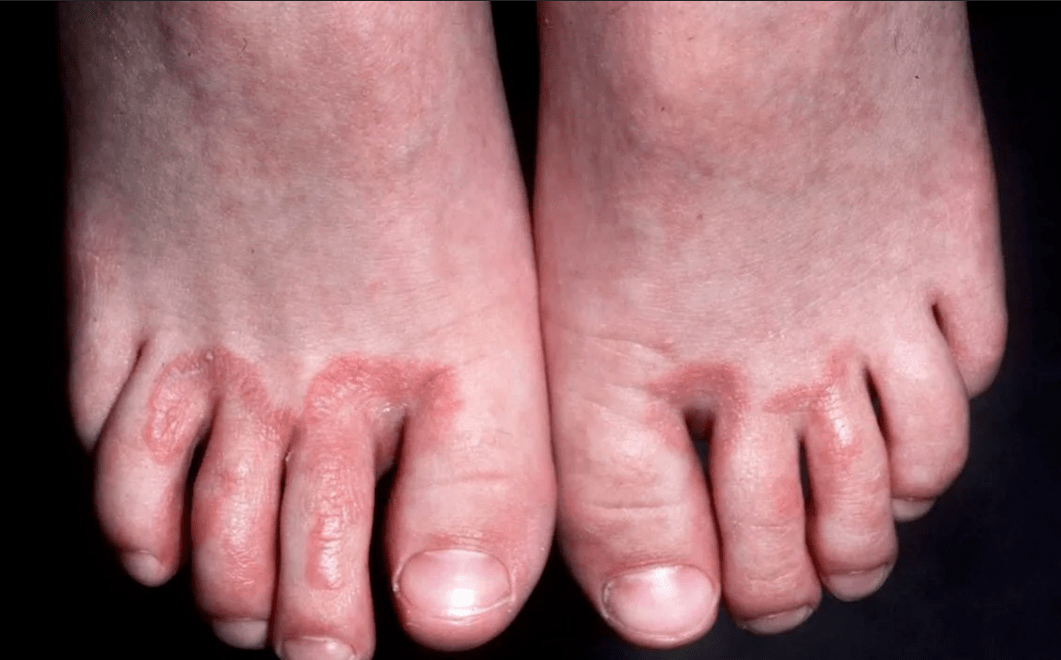
- Intertriginous.Swelling, redness of the skin, moisture formation between the fingers, peeling of the skin and the formation of deep cracks occur.
- Dyshidrotic.It manifests as a rash of small blisters filled with serous fluid.Intense itching, erosions form at the site of burst blisters and the entire foot becomes inflamed.
IMPORTANT!In the later stages of the disease, the fungus penetrates the surface of the nails and begins to change color and structure.Nails become covered in colored spots, become deformed and crumble.
Diagnosis
- When the first clinical signs of an infectious infection appear, you should consult a doctor for a diagnosis.
- Although the symptoms of the fungus are clearly visible even in the photo,only a specialist can identify the specific pathogen.
The patient receives laboratory tests:
- Microscopy of skin particles.
- Bacterial culture of scrapings and blister fluid.
- Biomaterials DNA research.
- Blood test.
Treatment
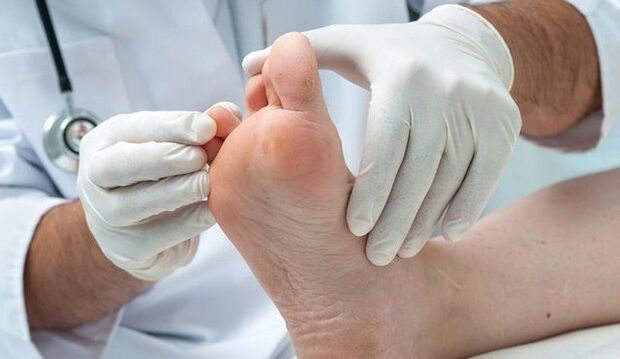
- Main events -careful skin hygieneand treatment with local antifungal medications.
- In the later stages of the development of a fungal infection, doctors prescribe oral antifungal medications.
- Folk remedies and physiotherapeutic procedures are used as auxiliary medicines.
- You can cure toe fungus by carefully following your doctor's recommendations, without reducing the time you take prescribed medications.
Medication
Drug treatment involves the use of two groups of medications:
- External preparations: ointments, creams, gels, sprays.
- Preparations for oral administration.
IMPORTANT!The complex of therapeutic measures also includes a special diet, the use of immunostimulants and means to restore intestinal microflora.
Physiotherapy
Physiotherapeutic procedures complement drug treatment and accelerate the healing process:
- UV irradiation of the skin.The rays penetrate the skin to a depth of 0.6 mm and kill the fungal spores contained therein.Sessions last 15 to 20 minutes.In the early stages of infection, the use of UV irradiation eliminates the need for the use of antifungal agents.
- Diathermy,amplipulse therapy, UHF therapy to improve peripheral circulation.
- Laser irradiation of the skin.Irradiation of the skin suppresses inflammatory processes, relieves itching and dries out moist areas.
Traditional methods
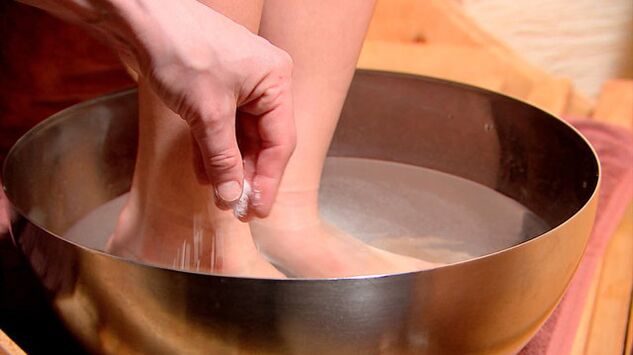
As a complement to medicines, preparations prepared according to popular recipes are quite effective.
According to reviews, the following provide effective assistance:
- Baths with soda and salt.1 tbsp.I.salts and soda are dissolved in 2 liters of water, 10 drops of iodine are added.The feet are immersed in the solution for 15 minutes.The procedure is carried out before applying the antifungal.
- Baths with decoction of potato peels.The feet are immersed in the broth, reduced to a comfortable temperature, for 20 minutes and then washed.The procedure is carried out daily until symptoms disappear.
- Baths with decoction of aspen bark.100 grams of crushed peel are placed in 500 ml of boiling water and allowed to cool.The resulting infusion is added to the bath.
- Garlic ointment.2 large cloves of garlic are crushed into a paste and mixed with 100 grams of butter.The ointment is applied to steamed skin for 10-15 minutes daily for a month.
- Applications with decoctionmedicinal herbs.Pour 2 tablespoons of chamomile, chamomile and violet into a liter of boiling water and leave for 2-3 hours.Gauze soaked in the infusion is applied to inflamed areas for 30 minutes daily.
- Compress with burdock leaf.A fresh burdock leaf is beaten with a hammer, the legs are wrapped in it, secured with a bandage and put on socks.The compress is changed twice a day.The duration of the course is 21 days.
- Applications with carrot juiceand vinegar.1 tbsp.I.Carrot juice and 9% vinegar are mixed and applied with a tampon to the inflamed areas.
- Egg and vinegar ointment.A raw egg is poured with 100 ml of vinegar essence (70%) and left for 7 days.The dissolved egg is mixed with 100 grams of butter and beaten.The resulting emulsion is lubricated on steamed legs, wrapped in film and put on socks.The procedure is repeated daily until the fungus is completely cured.
- Ammonia compress.Add 1 tablespoon to 200 ml of water.I.ammonia, soak gauze in the solution, wrap your feet in it and put on socks.The compress is done at night and left until morning.The total number of procedures is 9-10.
Several interesting recipes for treating fungus.The use of traditional medicine methods requires authorization from the attending physician.
Complications
Spreading throughout the body and penetrating the blood, the infection affects internal organs and has a negative impact on the functioning of the entire body:
- Prolonged exposure to fungal toxins causes allergic reactions, exacerbation of bronchial asthma and dermatitis.
- Penetration into the blood disrupts the functioning of internal organs.
- Deep mycosis causes the progression of diabetes mellitus and, in this context, gangrene and bone infection can occur.
Prevention
An organism with a strong immune system can resist any infectious disease.Therefore, the main measure to prevent fungal infection is to maintain the body's defenses.
Following the following hygiene rules will help you avoid infection with fungal spores:
- dailychanging socks and tights;
- use of breathable shoes made from natural materials;
- wearing special shoes(slippers, slippers) in public places;
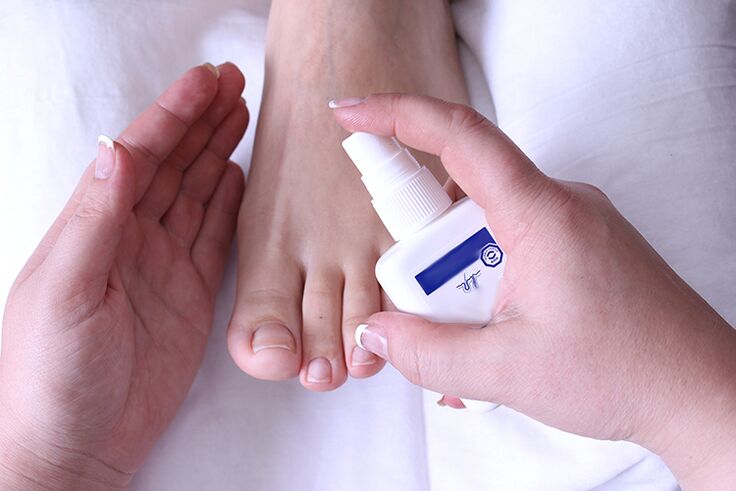
- foot skin treatmentspecial protective sprays when visiting swimming pools, baths and the beach;
- performing a pedicurein a verified salon,where instruments are properly disinfected;
- trying on shoes in a storein disposable socks.To prevent spores from remaining on various surfaces, it is necessary to treat them antiseptically with a 45% vinegar solution. It is recommended to replace cloths and slippers. Treat the rest of the shoes from the inside with a vinegar solution and place in a plastic bag for 12 hours.
- Boil bedding, socks, tights and towels for 10-15 minutes in a soap and soda solution.
Toe fungus should not be caused, therefore, when the first symptoms appear, it is recommended to consult a doctor.
Timely treatment will allow you to quickly deal with the fungus and avoid complications.Ringworm must be treated until the symptoms are completely eliminated and the skin is restored.
Fungus on the little toe: causes, symptoms (PHOTOS) and treatment methods
Nail or foot fungus always starts with the affected outermost toes.
Most of the time, the big toe is the first to suffer, as its nail is the largest in size, but in some cases the fungus appears first on the little toe.
This onychomycosis is dangerous due to the rapid destruction of the nail plate, which is associated with the small size of the little finger nail.
Reasons for the development of the disease
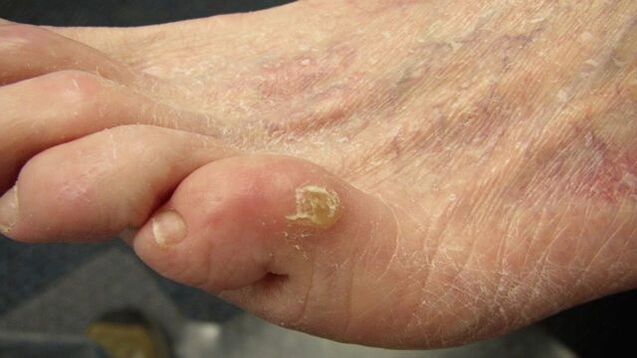
Nail fungus often starts with damage to the outside of the toes.
Fungus on the little toe is the result of poor personal hygiene when visiting public places.Fungal spores land on the skin in public showers and swimming pools.This is due to the fact that the fungus actively reproduces in a humid and warm environment.
Another reason for the development of the disease is excessive sweating and microtrauma of the nail plate.In this case, you can catch the disease by trying on other people's shoes, using towels or manicure tools.
Fungus on the little finger most often occurs due to contact with an infected person.A careless handshake can cause spores to get under the nail plate.
The main condition for the development of the disease is a decrease in immunity, both general and local.Hyperhidrosis, injuries and injuries, circulatory disorders in the extremities - all this leads to a decrease in local immunity and increases the risk of infection.
The peculiarity of fungal infection of the little finger is the rapid development of the disease.Onychomycosis is caused by fungi that feed on keratin, which is the building material for nails.
The smaller the nail, the faster the pathogenic microflora will destroy it, destroying the keratin, which means the infection will spread faster to healthy nails.
If, when the thumbnail is affected, the disease progresses slowly and the symptoms increase over the months, with onychomycosis on the little finger, the symptoms become visible within a week after the fungal spores get under the nail.
How to recognize the disease?
The characteristic symptoms of nail fungus on the little fingers depend on the exact area of location.The fungus can affect both the nail and the finger or the spaces between the fingers.In the first case, the symptoms are as follows:
- yellowing of the nail;
- thickening of the nail plate;
- the appearance of grooves and cracks;
- severe deformation of the nail.
A thick discharge with an unpleasant odor may appear under the nail.The infection is accompanied by purulent discharge.If left untreated, over time the nail will completely deteriorate and peel away from the nail bed.
When the skin of a finger is affected, the following symptoms are observed:
- skin redness;
- intense itching;
- pronounced peeling;
- the appearance of an unpleasant odor.
Fungus on the little finger is a serious threat to other healthy fingers, as the spores spread to healthy skin very quickly.In advanced cases, the fungus affects the spaces between the toes, nails and the skin of the foot.All this is accompanied by intense itching and unpleasant foot odor.
Diagnosis
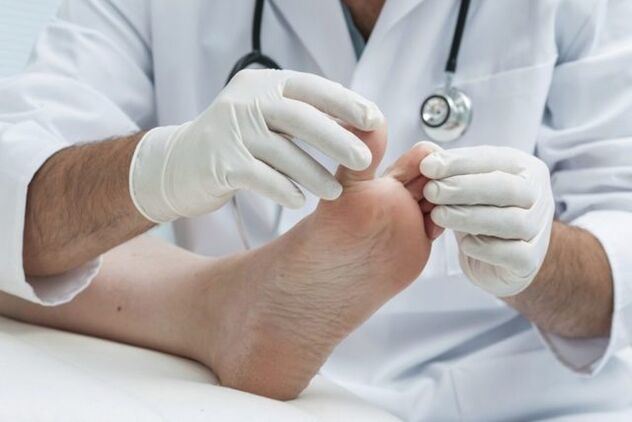
If you notice any changes to the nail or skin on your little finger, consult a dermatologist.The doctor will perform an examination and take a scraping for analysis.In case of skin damage, scaly scales are sent to the laboratory, which are easily separated from the skin.
If the nail plate is affected, the doctor will cut a small piece of the nail and take a sample of the exudate from under the nail plate.This material is sent to the laboratory for microscopic analysis.Based on the research carried out, the optimal treatment regimen is selected.
Treatment principle
To treat fungus on the little finger, external antifungal agents are used.To get rid of the disease faster, you need:
- maintain personal hygiene;
- take foot baths regularly;
- treat the skin around the affected area with an antiseptic;
- increase immunity.
To prevent the spread of fungal spores to healthy nails, you should use separate manicure tools for the affected finger;disposable nail files are best.Be sure to treat the affected area daily with special products, wash the skin thoroughly, carry out antiseptic treatment and only wear socks and shoes made from natural, breathable materials.
Drug treatment
In the treatment of fungal diseases of the feet and toe fungus, external agents are used, complementing the treatment with antiseptic baths.In severe cases, the doctor prescribes pills for the fungus.
Only a doctor can accurately select the medicine after examinations.The listed medicines are effective against yeast and fungi.Apply the cream twice a day to previously washed and dry skin.In this case, the product must be applied not only to the affected skin, but also to the healthy epidermis around the infected nail.
To prevent the spread of spores to healthy areas of the skin, additional use of antiseptics is necessary.For this purpose, hydrogen peroxide, potassium permanganate solution or iodine are used.
Products in the form of varnish remain on the nail plate for a long time, ensuring effective destruction of pathogenic microflora and preventing the spread of fungal spores.
Nail fungus treatment is time-consuming.On average, the course of therapy lasts 9 months.You can stop using medications only after a healthy nail grows back.
Before applying the varnish, the nails must be steamed, treated with a file and degreased with an alcohol solution or wipes moistened with alcohol.
In the initial stage of onychomycosis on the little finger, you can use potent antifungal creams.The medicine is applied after foot baths and pedicures.In order for the medicine to penetrate deeper into the nail plate, it is necessary to polish it well, eliminating all microcracks.
In severe cases of onychomycosis or if the disease recurs, the doctor may prescribe pills.They have a systemic effect on the entire body, helping to fight pathogenic microflora from the inside.
Nail removal
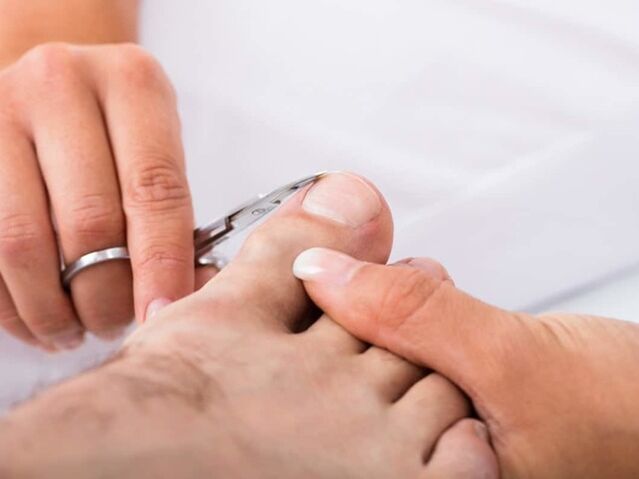
The nail on the little finger is small, almost invisible and grows back quickly, so the doctor may recommend a radical method of treatment - removing the nail infected with the fungus.The procedure itself is quick and painless.There are also special kits with uric acid that soften the nail and promote its independent removal from the nail bed.
After removing the nail, a special ointment and a bandage are applied to the finger.After 5-7 days, a crust forms under the bandage and can be removed.The nail will start to grow in about a month.During this period, it is necessary to use antifungal agents to prevent reinfection.
The benefits of nail plate removal are to minimize the risk of infection of healthy nails.This allows you to get rid of the fungus in a day, but you will have to wait until the nail grows back completely.On average, the little finger nail is completely restored in 3-4 months.
Folk remedies
It is advisable to use folk remedies for mild forms of fungus.They help prevent the spread of pathogenic microflora spores to healthy fingers, perfectly complementing drug treatment.
- Lemon juice effectively eliminates yeast fungus.Can be used when nails are affected by the Candida fungus;To do this, simply cover your nail with lemon juice twice a day.
- Antifungal paste will help defeat the disease.To prepare the product, you need to mix a teaspoon of soda with the same amount of water and apply it to the nail under a compress.The compress must be kept for half an hour, the procedure must be repeated twice a day until the symptoms disappear completely.
- The basis of popular treatment for fungus is baths.They can be prepared with iodine, soda, salt, hydrogen peroxide, powdered boric acid or medicinal herbs.For each liter of water you need to take a tablespoon of the selected product.Bathing should be done daily before going to sleep for 20 minutes.
Folk remedies perfectly prepare the skin and nails for applying ointments against fungus.As an independent remedy, they are ineffective, so you cannot fully rely on traditional medicine.
How to avoid infection?
Preventing fungal infection comes down to personal hygiene.You should always wear slippers when visiting public showers and swimming pools, do not use other people's towels and shoes.
If a person has already been infected with foot fungus, antifungal creams should be used regularly for prevention.To do this, simply apply them to your skin 1 to 2 times a week.
Foot hygiene plays an important role in protecting against fungus.It is necessary to wash your feet daily with antiseptic or tar soap, wear socks only made of natural fabrics and choose comfortable shoes made of breathable materials.
Fungus between the toes: symptoms (PHOTOS), the best ointments and folk remedies for treatment
Among all types of fungal diseases, foot lesions are the most common.
One type of athlete's foot is a fungus between the toes.The disease causes intense itching and peeling of the skin, which causes great discomfort.You can become infected with fungus in any public place with high humidity.
This type of ringworm occurs in both adults and children.
Reasons for the development of the disease
The fungus between the toes is a type of athlete's foot.The disease is contagious and difficult to treat.The course of therapy can last several months.
The fungus between the toes develops for the following reasons:
- poor foot hygiene;
- visit public places with high humidity;
- wear someone else's shoes;
- using someone else's towel.
The easiest way to get an infection is to visit public showers without the necessary protective equipment.The absence of individual slippers in the common shower, in the gym locker room or even in the sauna at moderate to high temperatures can cause fungal infection between the toes, the photo of the symptoms of which will not allow doubting the nature of skin peeling.
The development of fungus between the toes of a child and an adult can be caused by neglect of personal hygiene.Lack of proper foot care leads to the accumulation of sweat and dirt in the spaces between the toes.
This is a favorable environment for fungal growth.
Since some pathogens are always present in the human body, the development of fungal microflora on the skin can occur even without contact with a potential source of infection.
The fungus of the feet and the skin between the toes is a highly contagious mycosis.You can get sick from trying on someone else's shoes if the person is infected.This is explained by the fact that fungal spores settle on the inner surface of the shoe and easily fall onto healthy skin.

You can get sick even if one of your family members is fighting a yeast infection.The fact is that spores of pathogenic microflora settle on everything that comes into contact with the affected skin.Spores persist in carpet pile, towels, and bathroom and shower surfaces.The slightest contact with these objects is enough for the spores to penetrate healthy skin.
However, not everyone gets a fungal infection from using someone else's towel or bath.Factors that provoke the development of fungus between the toes:
- decreased immunity, both general and local;
- presence of lesions on the skin of the feet;
- profuse sweating;
- prolonged use of antibiotics;
- frequent stress;
- wear very narrow shoes;
- diseases that cause circulatory problems in the lower extremities.
Long-term drug therapy and frequent stress weaken the body, making it vulnerable to various bacteria and fungi.Wearing tight shoes impairs local blood circulation, which reduces the feet's immunity.This creates favorable conditions for the rapid development of pathogenic microflora.
People with diabetes mellitus, cardiovascular diseases and varicose veins of the lower extremities are especially susceptible to foot and interdigital fungus.All these pathologies lead to a deterioration in local metabolic processes and a violation of cellular immunity, which increases the risk of fungal infection.
Factors provoking the development of infection include wearing too narrow shoes made of low-quality materials, synthetic socks and profuse sweating.All this creates a favorable environment for the development of pathogenic microflora.With profuse sweating, the process of increasing the fungal population accelerates, since this microflora loves a warm and humid environment.

Folk remedies
Traditional medicine knows how to get rid of the fungus between the toes.For this, it is proposed to use baths and solutions for skin treatment.
- Pour 2 bags of boric acid into a bowl of water and place your feet in it for 20 minutes.Apply every other day.
- An effective bath for ringworm is 4 liters of hot water, 2 tablespoons of soda, salt and iodine.Take it for 15 minutes and then lubricate your feet with medicinal ointment.
- You can use applications of soda solution with vinegar.To prepare the product, you need to dissolve a teaspoon of soda and vinegar in half a glass of water.Then a cotton swab is moistened in the solution and the skin is carefully treated.
For daily foot hygiene, it is recommended to use tar or laundry soap.They perfectly degrease the skin and have a weak antifungal effect.
Preventing the development of fungus between the toes involves careful foot hygiene.It is important to always take your own rubber slippers to the pool, gym and sauna.You should not use other people's hygiene products or try on other people's shoes, as fungal spores may remain on them.
From all that has been said, we can conclude that foot fungus is an extremely dangerous disease.The consequences of the disease can be extremely negative for human health.You should not self-medicate to avoid causing complications.